When Sister Connie Kramer died on January 30, 2025, after battling an inoperable brain tumor, the Archdiocese of Indianapolis lost a seasoned spiritual leader. But for Christine Turo-Shields, the loss was deeply personal. Sr. Connie had been her spiritual director, mentor and close friend.
What followed was not only grief but preservation.
In late 2024, months before Sr. Connie’s passing, Turo-Shields recorded a StoryCorps interview with her mentor, capturing reflections on mortality, faith and acceptance. That conversation would become a cornerstone for Turo-Shields’ recent essay published February 7, 2026, in the National Catholic Reporter, one of the most widely read Catholic news platforms in the United States.
“Those who do not make peace with Life, fear Death,” Turo-Shields writes, distilling the spiritual clarity Kramer embodied in her final months.

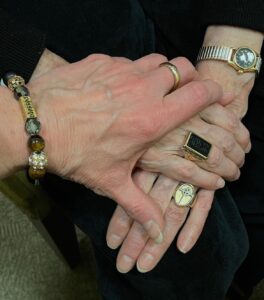
Turning Private Loss Into Public Leadership
Rather than retreat inward, Turo-Shields chose to channel her grief into a broader conversation about faith-informed mental health care. As owner of Kenosis Counseling Center in the Indianapolis metro area, she has spent nearly 40 years helping individuals navigate trauma, anxiety, depression, addiction and suicide loss.
Her approach integrates EMDR therapy with spiritual formation, an uncommon but increasingly sought-after combination in a post-pandemic landscape marked by existential questioning.
The NCR publication signals more than a personal milestone. It reflects a rising appetite for leadership that acknowledges both clinical rigor and spiritual depth.
A Growing National Voice
Beyond her private practice, Turo-Shields serves on the Indiana State Board for the American Foundation for Suicide Prevention and is a national speaker on grief, spirituality and suicide loss recovery. Her 2026 speaking calendar includes faith-based summits, survivor retreats and healthcare chaplaincy events.
The through line is clear: grief is not pathology, it is passage.
By documenting Sister Connie’s final reflections and translating them for a national audience, Turo-Shields positions herself at the forefront of a nuanced dialogue—one that reframes death not as failure, but as a profound teacher.
In honoring her mentor, she has amplified a message the mental health field increasingly cannot ignore: healing is most durable when it speaks to both psyche and soul.