




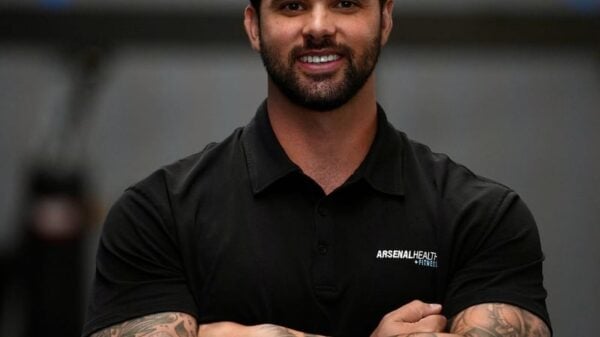













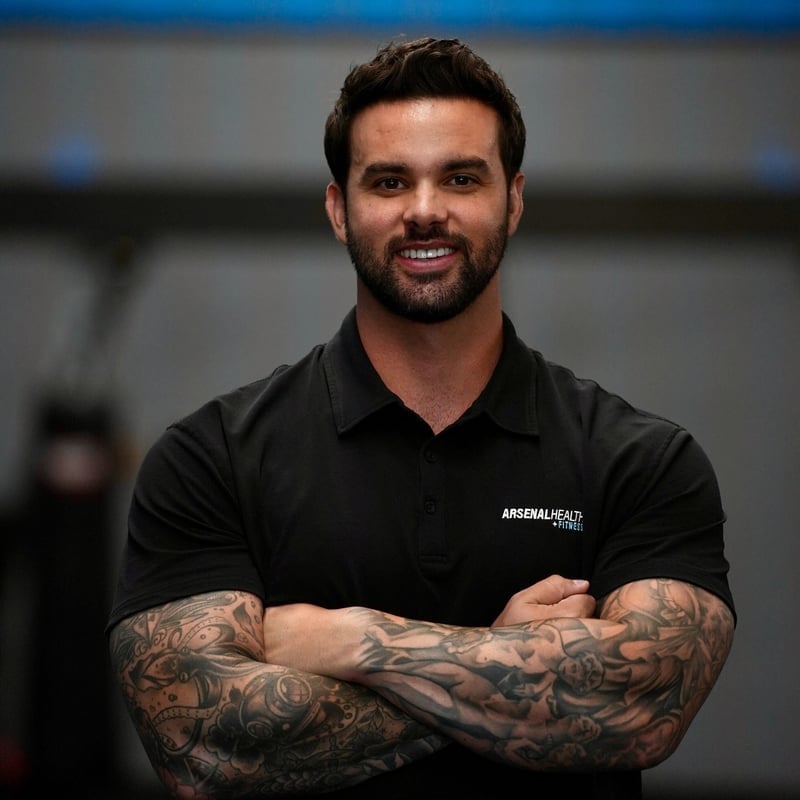
The founder of Arvada’s Arsenal Health turned his own frustrating trip through the health care system into a company that puts training, recovery and clinical care under one roof.
Jake Rowzee did what he was supposed to do. He trained hard, watched his diet and paid attention to recovery. Then, in his late twenties, his body stopped cooperating.
He was chronically fatigued. He was putting on weight. Anxiety and depression, he later wrote, “started to creep into the back of my mind.” His primary care doctor ran blood work, told him he was healthy and “just stressed,” and suggested anti-anxiety medication.
Rowzee, who was working as a surgical neurophysiologist at the time, did not accept the answer. A hormone panel his doctor had never ordered turned up the problem, and treatment brought what he described as nearly complete relief within weeks. He has written about that stretch openly, including on the founder site Starter Story in 2024. What stayed with him was not the fix. It was how hard it had been to find.
“Figuring out my own health issues sparked a new passion,” he wrote, “to empower others to take control of their own health and be proactive rather than reactive.”
No single place to go
Rowzee’s path to that point had not been straight. He grew up playing hockey until an injury, in his words, “benched” his plans to make it a career. He moved into bodybuilding and became fascinated by programming, nutrition and recovery. At the University of Colorado Boulder, with one class left on an economics degree, he switched paths to integrative physiology. That led to neurophysiology and part ownership of a practice.
As friends started coming to him for advice, he noticed a gap. People trying to get healthier were juggling separate providers who never talked to each other: a trainer here, a lab there, a doctor somewhere else.
“There wasn’t a single place that someone could go to combine different methods to achieve better health,” he wrote. “When attempting to combine a multifaceted wellness plan there was no continuity of care between practitioners because they all were separate practices.”
His fix was to put them in the same building. Someone trying to lose weight, he argued, should be able to check for a hormone imbalance, metabolic issues or micronutrient deficiencies first, then work with a trainer and a dietitian who are working from the same plan.
Starting during COVID
He launched Arsenal Health in July 2021, in the middle of the pandemic. “While to many it seemed like a bad time to start a business, to me it was the perfect time,” he wrote. He had no marketing budget, so he texted everyone in his contacts and told people at the gym, changing his pitch from offering recommendations to a simpler line: “I’m here to help.” The company made its first sale on day one.
Arsenal was a side project at first. Rowzee was still running his neurophysiology practice. He has been candid about what that cost. “The business operations quite literally lived in my head,” he wrote, a setup he says pushed the company to a breaking point before it built real procedures.
What it looks like now
Today Arsenal Health runs locations in Arvada and the Denver Tech Center, with a Louisville location listed as opening in 2027. The model is the one Rowzee described from the start. Members get a plan that combines personal and small-group training, a recovery center with cold plunge, sauna, red light and compression therapy, and clinical services such as IV therapy, hormone optimization and lab reviews. The company lists a medical team that includes a physician medical director, nurse practitioners, a physician assistant and registered nurses.
The company says it has served more than 4,000 members. It was named Best Arvada Gym for 2026, and Inc. ranked it No. 2 on its 2026 Regionals list for the Rocky Mountain region, which ranks private companies by revenue growth.
Rowzee is careful about how it gets sold. “Most people I see in the health and wellness industry sell ‘fast fixes,'” he wrote. “What I have found is that people care more about doing it the right way and finding something that is sustainable.”
His advice to other founders comes from the same place. “There are no bonus points for struggling in silence and figuring it out ‘on your own,'” he wrote. Ask for help, he says, but learn why the answer works, “or you will be reliant on them forever.”
It is the same lesson he took from his own health. He did not need someone to tell him he was fine. He needed someone to look.