



























The 4D Printing Market is at the forefront of technological transformation, combining the precision of 3D printing with intelligent, self-transforming materials that react to environmental stimuli. This innovation goes beyond traditional additive manufacturing by creating products that can adapt and reconfigure themselves when exposed to elements like heat, moisture, or light. Industries such as healthcare, aerospace, defense, and automotive are rapidly adopting 4D printing due to its immense potential to revolutionize product design, reduce material waste, and enhance performance efficiency.
4D Printing Market Size and Growth Outlook
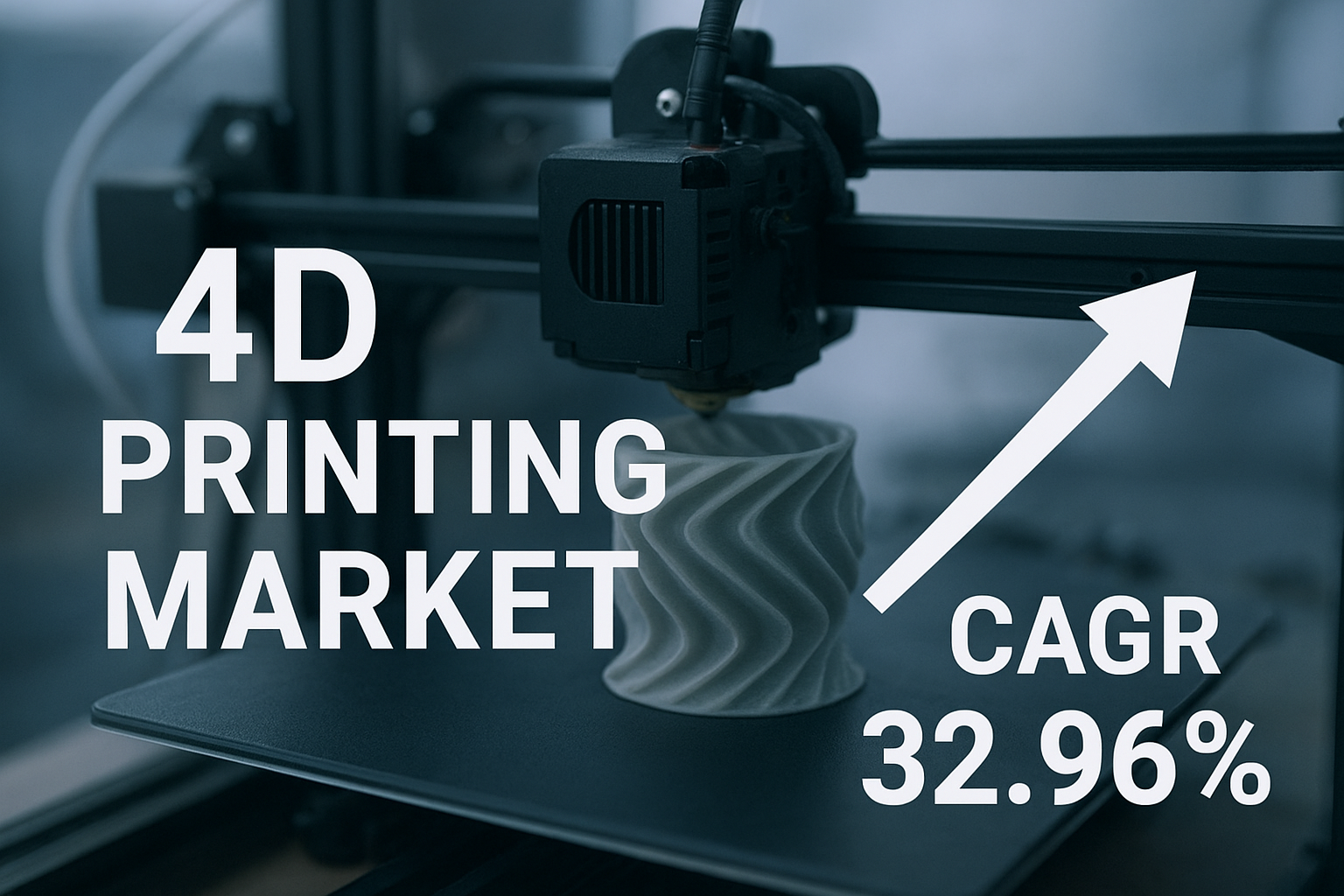
According to the SNS Insider, The 4D Printing Market Size was valued at USD 217.26 million in 2024 and is expected to reach USD 2,121.98 million by 2032, growing at a CAGR of 32.96% during the forecast period 2025–2032. This remarkable growth reflects the increasing demand for advanced manufacturing technologies that offer both flexibility and functionality. As industries continue to focus on sustainability, 4D printing is emerging as a key solution that minimizes resource consumption while maximizing product lifespan.
This exponential market expansion is driven by the integration of smart materials and responsive polymers capable of adjusting to external conditions. Moreover, ongoing R&D investments by major technology companies and universities are accelerating commercial applications, making 4D printing one of the most promising technologies in next-generation manufacturing.
4D Printing Market Trends Driving Innovation
One of the major 4D Printing Market trends shaping the industry is the rise of programmable materials, which are engineered to change shape or function based on stimuli such as temperature or water exposure. These materials enable the production of self-assembling components, responsive textiles, and adaptive medical implants.
Another key trend is the integration of artificial intelligence and machine learning in the design phase. AI-driven design optimization allows engineers to predict how materials will behave over time, leading to more efficient product prototypes. Additionally, advancements in nanotechnology are expanding the material base for 4D printing, enabling finer precision and broader functionality across industries.
4D Printing Market Key Drivers Fueling Expansion
Several crucial 4D Printing Market drivers are propelling its global expansion. First, the rising need for cost-efficient manufacturing processes with minimal material waste is pushing industries toward adaptive production systems. 4D printing fits this need by enabling reconfigurable and reusable materials, significantly reducing production costs over time.
Second, the healthcare industry is witnessing rapid adoption of 4D printing technology in developing personalized implants, prosthetics, and drug delivery systems that adjust to the patient’s body conditions. This personalization potential is transforming patient care by improving treatment effectiveness and comfort.
Furthermore, the aerospace and defense sectors are increasingly relying on 4D-printed components that can endure extreme environments and self-heal from damage, boosting durability and safety while cutting maintenance costs.
4D Printing Market Challenges and Limitations
Despite its rapid progress, the 4D Printing Market faces several challenges. The high cost of smart materials and complex design processes continues to limit large-scale adoption. Manufacturing precision remains a technical challenge, as designing materials that respond accurately to environmental stimuli requires advanced simulation tools and expertise.
Additionally, limited standardization and regulatory guidelines hinder the widespread implementation of 4D printing in critical industries like healthcare and aerospace. Overcoming these challenges will require collaboration between research institutions, manufacturers, and government agencies to develop frameworks that support innovation while ensuring safety and quality.
4D Printing Market Opportunities and Future Potential
The 4D Printing Market presents significant opportunities for future growth. One major opportunity lies in sustainable manufacturing. 4D printing enables the creation of adaptive materials that extend product life and reduce waste, aligning perfectly with global sustainability goals.
The fashion and textile industry also holds immense potential, as 4D-printed fabrics can adjust to environmental changes, offering both comfort and functionality. In addition, the development of self-assembling construction materials could revolutionize architecture and infrastructure, enabling faster, more resilient, and cost-effective building processes.
As research continues, 4D printing is expected to evolve into a mainstream manufacturing solution, reshaping industries and enabling the next era of smart, responsive products.
Regional Insights: 4D Printing Market Growth Across the Globe
Regionally, North America dominates the 4D Printing Market due to strong research capabilities, robust funding, and a high concentration of leading technology players. The United States, in particular, is pioneering advancements in healthcare and aerospace applications of 4D printing.
Europe follows closely, driven by sustainability initiatives and government-backed research programs promoting smart manufacturing technologies. The region’s focus on eco-friendly innovation aligns well with the adaptive nature of 4D printing.
Meanwhile, the Asia-Pacific region is emerging as the fastest-growing market, fueled by industrialization, expanding manufacturing sectors, and government investments in advanced technology infrastructure in countries such as China, Japan, and South Korea. This regional growth highlights the global shift toward intelligent and adaptive manufacturing ecosystems.
Future Outlook for the 4D Printing Market
Looking ahead, the 4D Printing Market is expected to transform multiple industries by merging digital design, smart materials, and automation. As technology matures and costs decline, 4D printing will move beyond prototyping into full-scale production across sectors. The convergence of AI, robotics, and material science will further enhance the adaptability and precision of 4D-printed products, shaping a future where materials think, move, and evolve.
In essence, 4D printing is not just the next step in additive manufacturing—it is the bridge to intelligent, self-evolving materials that redefine how we build, heal, and innovate.
FAQs about the 4D Printing Market
- What is the CAGR of the 4D Printing Market during 2025–2032?
The 4D Printing Market is projected to grow at an impressive CAGR of 32.96% from 2025 to 2032, driven by rising adoption of smart materials and expanding applications across industries such as healthcare, aerospace, and automotive. - What is the forecast period for the 4D Printing Market growth?
The forecast period for the 4D Printing Market is 2025–2032, during which the market is expected to witness rapid technological advancements and commercialization of adaptive materials.
3. Which region is expected to witness the fastest growth in the 4D Printing Market?
The Asia-Pacific region is anticipated to experience the fastest growth, fueled by industrial expansion, strong government support for advanced manufacturing, and increasing adoption of smart technologies in sectors like automotive and electronics.