












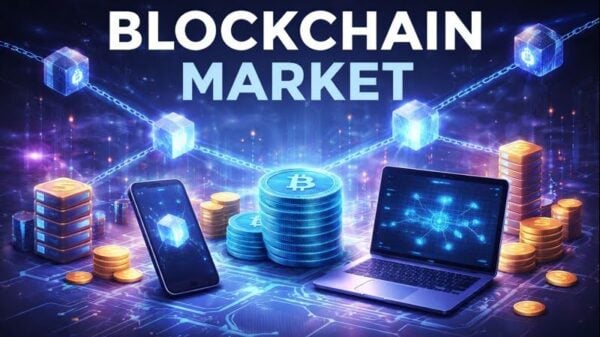









Land that exists only in code is selling for real money—sometimes millions of dollars. Blockchain technology makes this possible by turning digital parcels into verifiable, tradeable assets that buyers actually own.
This guide covers how virtual real estate works, what drives its value, and how ARMAVERSE offers a distinct entry point for investors ready to claim their stake in the metaverse.
WHAT IS VIRTUAL REAL ESTATE
Virtual real estate refers to digital land parcels inside metaverse platforms, purchased and secured through blockchain technology. Ownership is recorded as an NFT—a non-fungible token—which acts like a digital deed that proves the land belongs to you. This setup allows investors to buy, sell, and develop property in virtual worlds the same way people trade physical real estate, just without the paperwork or middlemen.
Digital lands and estates in the metaverse
Metaverse land breaks down into a few categories. Parcels are individual plots with specific coordinates on a virtual map. Estates combine multiple parcels into larger developments. And virtual worlds are the platforms themselves—Decentraland, The Sandbox, and emerging ecosystems like ARMAVERSE all operate as distinct digital territories.
Each world has its own economy, community, and rules. Picking where to invest matters as much as picking a neighborhood in the physical world.
Metaverse properties as NFTs
An NFT is a unique digital certificate stored on the blockchain. When you buy virtual land, you receive an NFT that represents your ownership of that specific parcel.
Unlike a screenshot or a downloaded file, an NFT can’t be copied or faked. The blockchain permanently records who owns what, so your property rights are verifiable by anyone at any time.
How virtual worlds use native tokens
Every metaverse platform runs on its own cryptocurrency token. ARMAVERSE uses $ARMA. Decentraland uses MANA. The Sandbox uses SAND.
To buy land or transact within a specific world, you’ll typically use that world’s native token. Understanding which token powers which platform is the first step before making any purchase.
HOW BLOCKCHAIN POWERS VIRTUAL REAL ESTATE OWNERSHIP
Blockchain is the technology that makes virtual property ownership trustworthy. It removes the banks, lawyers, and title companies that normally sit between buyers and sellers.
Smart contracts for property rights
A smart contract is a piece of code that automatically executes when certain conditions are met. In virtual real estate, the smart contract transfers ownership from seller to buyer the moment payment clears.
No waiting. No approval process. The code handles everything.
Transparent transactions on decentralized networks
Every transaction gets recorded on a public ledger that anyone can view. You can trace the full ownership history of any parcel—who bought it, when, and for how much.
This transparency eliminates disputes about who owns what. The record is permanent and tamper-proof.
True ownership without intermediaries
When you hold virtual land, you control the private keys in your wallet. No platform administrator can revoke your access or freeze your assets.
This is different from owning something in a traditional video game, where the company can shut down servers or ban your account. With blockchain-based ownership, the land is yours until you decide to sell it.
WHY INVEST IN VIRTUAL REAL ESTATE
Virtual real estate offers a different kind of opportunity than stocks, bonds, or physical property. The market is young, the barriers are low, and the creative possibilities are wide open.
Early-stage investment potential
The metaverse is still in its early days. User adoption continues to grow, and many prime locations remain available at accessible prices.
Early investors in internet domain names saw significant returns as the web matured. Virtual land operates on a similar principle—scarcity plus growing demand can drive value over time, with the virtual land NFT market projected to grow from $1.1 billion in 2025 to $20.9 billion by 2035.
Low barriers to entry for new investors
Buying physical real estate requires mortgages, credit checks, and large down payments. Virtual land requires none of that.
You can purchase a parcel with cryptocurrency in minutes, from anywhere in the world. Entry-level plots on some platforms cost a few hundred dollars.
Creative freedom and monetization opportunities
Owners can build whatever they want on their land. The options include:
- Virtual events: Host concerts, conferences, or meetups and charge admission
- Advertising space: Rent your parcel to brands looking for visibility
- Interactive experiences: Build games, galleries, or social spaces
- Digital storefronts: Sell NFTs, virtual goods, or services
Portfolio diversification with digital assets
Virtual real estate often moves independently from traditional markets. When stocks drop, metaverse land doesn’t necessarily follow—the global metaverse real estate market is projected to reach $67.40 billion by 2034, expanding at a 36.55% CAGR regardless of traditional market cycles.
Adding a new asset class to your portfolio can reduce overall risk. Virtual property offers exposure to the growth of Web3 and the metaverse economy.
BENEFITS AND RISKS OF METAVERSE REAL ESTATE
Every investment carries trade-offs. Virtual real estate is no exception.
Key benefits of buying virtual real estate
| Benefit | What it means |
|---|---|
| Global access | Buy and manage property from anywhere with an internet connection |
| No physical maintenance | No repairs, no property taxes, no HOA fees |
| Programmable assets | Build interactive experiences impossible in the physical world |
| Governance rights | Some platforms let landowners vote on development decisions |
Risks of virtual real estate investing
- Platform dependency: If the metaverse platform fails, your land loses its utility
- Volatility: Prices can swing dramatically based on hype and market sentiment
- Liquidity: Selling may take time if buyer demand is low
- Technical learning curve: Wallets, tokens, and transactions require some baseline knowledge
Note: Virtual real estate is speculative. Invest only what you can afford to lose.
HOW TO BUY LAND IN METAVERSE PLATFORMS
The process is straightforward once you understand the steps. Here’s the sequence from start to finish.
1. Choose your metaverse platform
Research different virtual worlds before committing. Look at user activity, the development roadmap, and the type of community being built.
ARMAVERSE offers a narrative-driven post-apocalyptic world with 0% buy and sell tax on its $ARMA token. Other platforms have different features and fee structures.
2. Set up a digital wallet like MetaMask
Download MetaMask or a similar self-custody wallet. This wallet stores your cryptocurrency and NFTs while serving as your identity in the metaverse.
Write down your seed phrase and store it somewhere safe. Lose the seed phrase, lose access to your wallet.
3. Fund your wallet with BNB or Ethereum
Add the correct cryptocurrency for your chosen platform. ARMAVERSE runs on Binance Smart Chain, so you’ll use BNB. Ethereum-based platforms require ETH.
You can buy crypto directly in MetaMask, transfer from another wallet, or purchase on an exchange like Coinbase and send it to your wallet address.
4. Connect to a decentralized exchange
Navigate to the platform’s marketplace or a decentralized exchange like PancakeSwap for BNB-based tokens. A DEX lets you trade directly from your wallet without a middleman.
Double-check the URL before connecting. Phishing sites are common.
5. Execute your purchase and verify ownership
Follow the on-screen prompts to complete your swap or purchase. Sign the transaction when your wallet asks for confirmation.
After the blockchain confirms the transaction, the land NFT or token appears in your wallet. You can verify everything on a block explorer like BscScan.
HOW MUCH DOES METAVERSE PROPERTY COST
Prices range from a few hundred dollars to millions, depending on the platform and location, with real estate NFTs already surpassing $1.4 billion in market size after 32% year-over-year growth.
Emerging platforms like ARMAVERSE often offer lower entry points than established worlds. Early positioning in a growing ecosystem can mean better prices before wider adoption drives demand.
IS VIRTUAL REAL ESTATE A GOOD INVESTMENT
That depends on your risk tolerance and your belief in the metaverse’s future. Virtual land is tied to platform adoption, community growth, and the broader development of Web3.
The upside can be significant. The downside is real. Research the platform’s team, vision, and roadmap before putting money in. Treat this as a long-term, speculative position rather than a guaranteed return.
WHY ARMAVERSE IS BUILT FOR VIRTUAL REAL ESTATE INVESTORS
8 BILLION PEOPLE 8 BILLION TOKENS
ARMAVERSE stands apart from generic digital worlds. It’s built for investors who want narrative, transparency, and frictionless trading.
A narrative-driven metaverse beyond Armageddon
ARMAVERSE isn’t empty land waiting for a purpose. It’s a post-apocalyptic world where survivors rebuild after global collapse.
The $ARMA token emerges as the world’s reserve digital currency in this narrative. Owning a piece of ARMAVERSE means participating in a story, not just holding an asset.
Zero tax trading with the $ARMA token
0% BUY TAX. 0% SELL TAX.
You keep 100% of every trade. No slippage concerns, no hidden fees eating into your position.
Transparent tokenomics and locked liquidity
- Locked liquidity: Developers cannot pull funds from the trading pool
- 20% initial burn: Permanently reduced supply increases scarcity
- Total supply: 10,000,000,000 tokens
- Clear allocation: 30% for DEX/CEX listings, with defined portions for airdrops, marketing, partnerships, and development
Community-centric growth and 8 billion tokens
8 BILLION PEOPLE 8 BILLION TOKENS
ARMAVERSE grows through its community—airdrops, partnerships, and development driven by user feedback. The vision is as big as humanity itself.
THE FUTURE OF VIRTUAL REAL ESTATE BELONGS TO BOLD INVESTORS
Traditional systems show cracks. Digital ownership on the blockchain represents something different—a new frontier without gatekeepers.
THERE WILL BE SURVIVORS. THERE WILL BE HOPE.
The bold claim their stake now. The future belongs to those who build it.
8 BILLION PEOPLE 8 BILLION TOKENS
FAQs About Virtual Real Estate Investment
Can I lose money investing in virtual real estate?
Yes. Values can decline based on platform popularity, market conditions, and broader crypto trends. This is a speculative asset class.
How do I sell virtual land after I buy it?
List your property on the platform’s marketplace or secondary NFT marketplaces like OpenSea. The smart contract handles the transfer automatically when a buyer completes the purchase.
What happens to my virtual property if the metaverse platform shuts down?
Access to your land would likely be lost. The digital world it exists within would no longer be maintained, which is why platform selection matters.
Do I need to pay taxes on virtual real estate gains?
In most places, profits from selling virtual real estate count as capital gains and are taxable. Consult a tax professional familiar with cryptocurrency in your jurisdiction.
How is virtual real estate different from buying cryptocurrency tokens?
Virtual real estate is a non-fungible token representing a specific, unique parcel. Cryptocurrency tokens like $ARMA are fungible—each unit is identical and interchangeable with another.