











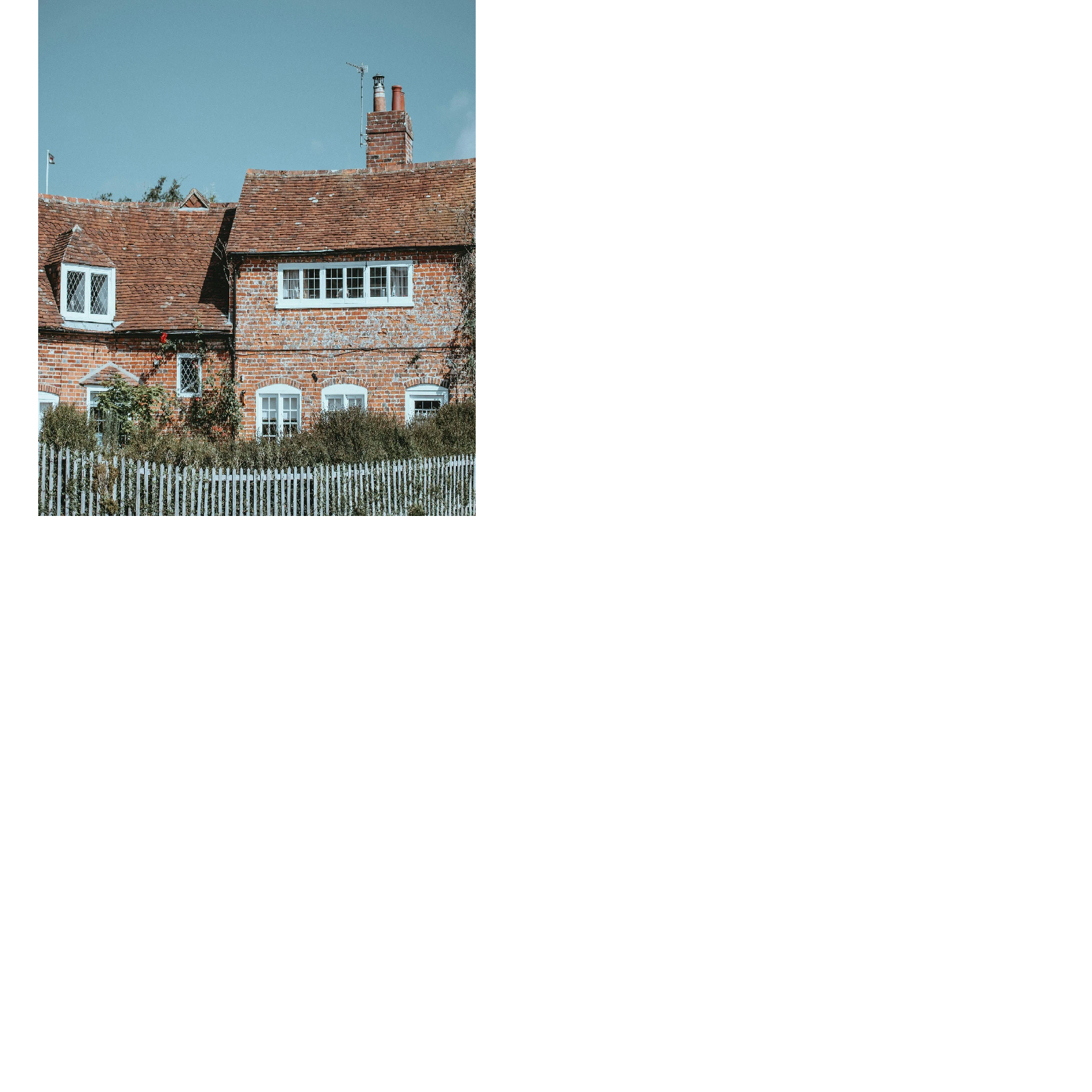
Photo By: Annie Spratt
Before Joe Ochal ran a 20-person chimney and fireplace company serving Greater Philadelphia, he spent his mornings in laboratories at Temple and Thomas Jefferson Universities studying microbiology. To pay for textbooks and tuition, he spent his afternoons cleaning local chimneys for his uncle’s hearth business.
Ochal’s graduate school classmates eventually started calling him “The Chimney Scientist,” according to a 2023 profile by journalist Cory Maki, after he repeatedly arrived at study groups still wearing soot from morning fireplace jobs.
Ochal eventually earned his master’s degree, but rather than pursuing a traditional laboratory career, he leaned into trade entrepreneurship, founding Chimney Scientists, one of the largest chimney companies in the U.S., serving the Philadelphia area. Yet instead of abandoning his academic training, Ochal simply split his focus, applying combustion mechanics and physics to residential heating by day, while channeling support from his business into local watershed science.
Today, that support has helped build an active scientific and educational pipeline connecting a regional watershed association, a university biology department, and dozens of emerging environmental scientists along the Schuylkill River.
Building a Research Pipeline
Like many community-based environmental organizations, Valley Forge Watershed Association (VFWA) needed resources to sustain water quality testing beyond occasional sampling, sustained PhD oversight, and long-term baseline data collection.
Through financial support and active involvement with the VFWA, where Ochal also serves on the board of directors, Chimney Scientists through their Watershed Project, helped fund equipment purchases and establish a dedicated water quality monitoring initiative.
Rather than treating the initiative as a passive corporate donation, VFWA partnered directly with Delaware Valley University (DelVal) and Dr. Emily Basile, an assistant professor of biology and ecotoxicologist with a doctorate from Drexel University.
The resulting program transformed a standard regional monitoring effort into a hands-on field laboratory for DelVal students studying aquatic ecosystems, limnology, and environmental science.
37 Students and a River
For Dr. Basile, the partnership provided something vital to modern scientific education: a real-world, long-term testing ground where students could gather actionable environmental data rather than relying solely on textbook simulations.
“In my courses, students learn how to use field-specific equipment to collect data about the physical, chemical, and biological properties of lakes and streams,” Dr. Basile explained in an interview with DelVal Communications. “All the data collected throughout the semester is incorporated into their final work… It’s a great learning experience because on top of a list of skills they can list on a resume, they can also demonstrate that they can apply those skills in a real-life situation.”
To date, more than 37 undergraduate students have completed formal research assistantships through the initiative, conducting long-term water quality monitoring along the Schuylkill River.
The students have the opportunity to earn E360 research credits while sampling parameters like pH, temperature, nutrient runoff, and potential aquatic contaminants.
For many of these undergraduates, the field monitoring serves as their first exposure to professional environmental consulting workflows. Rather than working with sterile lab samples, students learn how weather events, seasonal agricultural runoff, and suburban expansion directly alter the river’s chemistry in real time.
A Scientist’s Approach to a Trade Business
Ochal’s scientific background has never been entirely separate from his work in the trades. It shapes how he approaches chimney diagnostics, but it also appears to have influenced what he believes a small business can contribute outside its immediate customer base.
In the chimney trade, he relies on diagnostic digital photography, flue liner physics, and emission-reduction research (including his own industry initiative, The Firewood Project, aimed at lowering wood-burning particulate emissions).
Along the Schuylkill River, that same reliance on empirical measurement helps ensure local conservation groups aren’t relying on guesswork to assess river health.
“I love home heating, the smells, the fire… but I’m hooked on the science and business of it too,” Ochal noted in the profile interview. “Our team works to bring customers comprehensive scientific education on their fireplaces.”
By investing in VFWA and DelVal’s aquatic biology program, Ochal’s business has effectively created a dual-purpose model: using trade services to solve immediate homeowner heating issues while simultaneously underwriting the equipment and field training needed to monitor regional water systems.
Practical Environmental Stewardship
As urban development, stormwater runoff, and climate fluctuations continue to place pressure on Southeastern Pennsylvania’s waterways, the data gathered by Dr. Basile’s students provides local conservationists with a clearer picture of Schuylkill River health.
For the students wading into the river with testing kits each semester, the program offers something equally valuable: proof that their academic work has immediate, practical utility outside the classroom walls.
For Ochal, the path from microbiology to chimney repair may look unconventional. But the connection is less surprising once you look at what happens in both places: observe, measure, understand, act. The laboratory changed locations, but the scientific instinct stayed.
The long-term nature of the dataset is what makes the project particularly valuable to regional conservationists. While single-day water sampling offers only a brief snapshot, multi-year monitoring allows researchers to track subtle ecological shifts and isolate recurring contamination trends across seasons. It transforms raw student data into a vital baseline for regional watershed management.