
















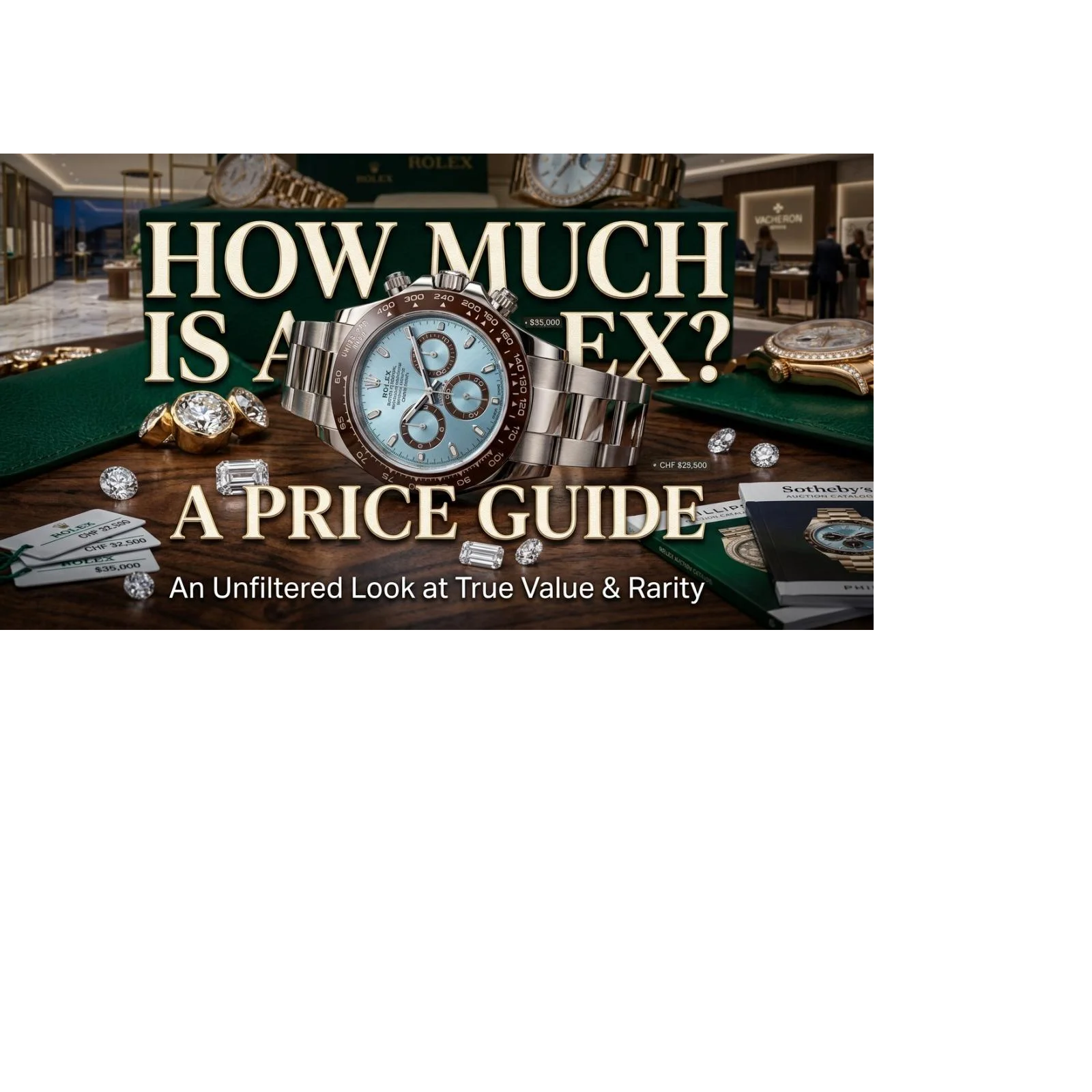
Buying a luxury timepiece is often as much an investment decision as it is a statement of personal style. Few watchmakers command the prestige, historical significance, and resale strength of Rolex. Whether you are stepping into an authorized dealer to buy your very first entry level reference or scouting secondary markets for an elusive modern classic, understanding the true financial reality of Rolex ownership requires looking beyond simple retail price tags.
Navigating watch pricing can feel complex given the dynamic nature of luxury retail, secondary market premiums, waitlists, and regional tax variations. To help you plan your next major horological purchase, this comprehensive guide breaks down current retail cost expectations, pre owned valuation factors, iconic models across key budgets, ongoing maintenance costs, and strategies for buying smartly.
The Reality of Retail vs. Secondary Market Pricing
When evaluating current watch valuations and asking how much is a rolex across modern markets, the answer largely depends on where and how you intend to buy it. Rolex operates on a dual tier pricing economy split between official MSRP (Manufacturer’s Suggested Retail Price) and the global pre owned market.
[ Authorized Dealer (MSRP) ] ──► [ Waitlist / Allocation ] ──► [ Immediate Availability ] ◄── [ Secondary Market (Market Value) ]
1. Authorized Dealer MSRP
Purchasing directly from an Authorized Dealer (AD) means paying the brand’s official retail sticker price. Retail prices generally start around $6,100 for basic stainless steel models and scale upwards of $45,000 or more for solid precious metal pieces. However, securing high demand stainless steel sports models at retail often involves waiting months or even years due to constrained global supply and high client demand.
2. Secondary and Gray Market Premiums
Due to allocation bottlenecks at official boutiques, pre owned dealers and gray market traders sell coveted references with immediate delivery. Depending on the specific reference, condition, and full set availability (box and papers), gray market prices can trade at a slight discount for less popular gold or small diameter models, or at significant premiums above MSRP for iconic professional steel watches.
Price Breakdown by Budget Tier
To help you match your budget with realistic expectations, Rolex models can be grouped into distinct price categories based on average secondary market values and official retail tiers.
1. Entry Level Tier ($6,000 to $10,000)
This tier represents the entry point into modern Rolex ownership, focused primarily on classic dress and versatile daily wear models.
-
Oyster Perpetual: As the purest expression of the brand’s core engineering, the Oyster Perpetual features a clean, no date dial, robust steel construction, and vibrant dial color options. Retail starts around $6,100 for smaller sizes and moves toward $6,400 for 41mm versions.
-
Datejust (36mm / 41mm): The ultimate everyday luxury watch. Featuring the iconic date window at 3 o’clock with a Cyclops magnifying lens, smooth or fluted bezels, and Oyster or Jubilee bracelets, classic stainless steel Datejust references typically range from $8,000 to $10,500 at retail.
-
Air King: Designed as an homage to aviation pioneers, the modern Air King stands out with its distinctive black dial, green accents, and prominent minute scale, retailing around $7,450.
2. Mid Tier Professional Sports Models ($10,000 to $18,000)
This iconic category houses the tool watches that built the brand’s global reputation for extreme durability, underwater exploration, and motorsport heritage.
-
Submariner: The world’s most famous dive watch. Stainless steel Submariner models (No Date and Date) retail between $9,100 and $10,250, though secondary market demand often commands $11,500 to $14,500 depending on reference details and color bezels like the “Kermit” or “Starbucks.”
-
Explorer & Explorer II: Built for adventurers and mountaineers, the Explorer line offers high contrast readability and rugged stainless steel construction. Retail prices range from $7,250 for the classic Explorer 36 up to $9,650 for the dual time Explorer II.
-
GMT Master II: Engineered for international pilots to track multiple time zones simultaneously. Known for two tone ceramic bezels like the “Pepsi” (red/blue) and “Batman” (blue/black), steel models retail around $10,700 to $10,900 but frequently trade near $15,000 to $18,000 on secondary platforms.
3. High Tier & Precious Metal Tier ($18,000 to $45,000+)
For collectors seeking precious metals, complex mechanical complications, or top tier flagship status.
-
Cosmograph Daytona: Rolex’s premier chronograph designed for racing drivers. While stainless steel models carry an MSRP near $15,100, extreme market demand drives gray market prices well above $25,000. Two tone (Rolesor) and solid gold versions easily span $20,000 to over $40,000.
-
Sea Dweller & Deepsea: Purpose built ultra deep diving instruments capable of withstanding extreme oceanic pressures. Prices range from $13,250 for standard steel Sea Dwellers up to $17,000+ for titanium or two tone Deepsea references.
-
Day Date (The “President”): Crafted exclusively in solid 18k yellow gold, white gold, Everose gold, or 950 platinum, the Day Date is a symbol of prestige featuring twin windows for day and date. Retail prices start around $38,000 and can exceed $60,000 with factory diamond dials or platinum builds.
Comprehensive Model Price Reference Table
The following comparison table outlines standard retail starting prices alongside realistic pre owned market expectations across key collections.
|
Collection Family |
Case Material Options |
Primary Complications |
Est. Retail MSRP Range |
Est. Secondary Market Range |
|
Oyster Perpetual |
Stainless Steel |
Hours, Minutes, Seconds |
$6,100 to $6,400 |
$6,500 to $8,500 |
|
Datejust |
Steel, Two Tone, Gold |
Date with Cyclops Lens |
$8,000 to $14,000 |
$7,500 to $13,500 |
|
Explorer / II |
Stainless Steel, Two Tone |
GMT Hand (Explorer II) |
$7,250 to $11,150 |
$7,800 to $11,500 |
|
Submariner |
Steel, Two Tone, Solid Gold |
Rotating Bezel, Date Option |
$9,100 to $39,000 |
$11,500 to $36,000 |
|
GMT Master II |
Steel, Two Tone, Gold, Platinum |
GMT Dual Time, Rotating Bezel |
$10,700 to $40,000+ |
$15,000 to $42,000 |
|
Daytona |
Steel, Gold, Platinum |
Tri Compax Chronograph |
$15,100 to $45,000+ |
$25,000 to $55,000+ |
|
Sea Dweller |
Steel, Two Tone, Titanium |
Helium Escape Valve, Depth |
$13,250 to $18,000 |
$12,500 to $17,500 |
|
Day Date 40 |
18k Gold, Platinum |
Day, Date, President Bracelet |
$38,500 to $60,000+ |
$34,000 to $58,000+ |
Primary Value Factors in the Watch Market
Understanding why two watch models that look almost identical can carry thousands of dollars in price difference requires looking closely at key valuation variables.
1. Case Material Selection
Material choices play a direct role in baseline manufacturing costs:
-
Oystersteel (904L Grade): Proprietary superalloy highly resistant to corrosion and chemical erosion.
-
Rolesor (Two Tone): A signature combination of Oystersteel paired with 18k yellow, white, or Everose gold.
-
Precious Metals: Solid 18k gold alloys (Yellow, White, Everose) and dense 950 Platinum command premium baseline costs due to raw material weight.
2. Complication Complexity
Standard time only movements (Oyster Perpetual) require fewer moving components than self winding chronographs (Daytona) or annual calendar mechanisms (Sky Dweller). Higher mechanical complexity directly correlates with higher initial retail pricing and specialized routine maintenance demands.
3. Box, Papers, and Provenance
In the pre owned and vintage ecosystem, complete sets (containing the original green presentation box, warranty card, instruction booklets, and hangtags) command a 10% to 20% premium over loose watch heads. Serial matching documentation proves authenticity and simplifies future resale transactions.
Additional Ownership Costs to Consider
Calculating the true cost of owning a high end luxury watch extends beyond the initial checkout purchase price.
[ Initial Purchase ] ──► [ Local Sales Taxes / Import Duties ] ──► [ Insurance Coverage ] ──► [ Routine Service Intervals ]
-
Routine Maintenance Services: Rolex recommends a complete overhaul every 10 years depending on wear. A full factory service by authorized watchmakers includes complete movement disassembly, ultrasonic component cleaning, lubrication, seal replacement, pressure testing, and light case refinishing. Expect routine overhaul costs between $800 and $1,500.
-
Specialized Watch Insurance: Protecting your timepiece against theft, loss, or accidental damage typically costs 1% to 2% of the watch’s appraised value annually.
-
Sales Tax and Import Tariffs: Depending on your state or national location, local sales taxes can add 5% to 10% to the total transaction value. When importing pre owned pieces internationally, customs duties and carrier brokerage fees should be calculated beforehand.
Key Strategies for Buying Smart
Whether you choose to shop at an official boutique or via private pre owned sellers, smart buying strategies help protect your capital and ensure an authentic purchase.
-
Build a Relationship with Local ADs: If you are willing to wait for a specific reference at MSRP, establish a relationship with a single local authorized jeweler. Regular visits and genuine enthusiasm for horology can help move your name up client allocation lists.
-
Buy the Seller, Not Just the Watch: When buying pre owned, select established, reputable gray market platforms or brick and mortar dealers that provide third party authenticity guarantees, return policies, and in house warranties.
-
Verify Movement Condition and Service History: Request timing machine (timegrapher) results and pressure testing records when inspecting used watches to confirm amplitude, daily rate accuracy, and water resistance integrity.
Frequently Asked Questions
1. Do Rolex watches hold or increase their value over time?
Historically, many steel sports models hold their value exceptionally well compared to other luxury consumer goods. Certain iconic references retain significant value or appreciate over long holding periods due to global brand recognition and limited factory production numbers. However, watches should primarily be purchased for personal enjoyment rather than purely financial speculation.
2. Why are pre owned prices sometimes higher than official boutique retail prices?
Secondary market prices reflect real time global supply and demand dynamics. Because consumer demand for models like the Daytona, Submariner, and GMT Master II exceeds boutique inventory allocations, buyers are willing to pay an immediate market premium to bypass multi year waiting lists.
3. Is buying a vintage Rolex cheaper than buying a brand new model?
Not necessarily. While entry level vintage Datejust or Oyster Perpetual references from the 1970s and 1980s can sometimes be acquired for less than modern retail prices, rare vintage sports references with rare dial variations, unpolished cases, or rich provenances can fetch tens or hundreds of thousands of dollars at specialized auctions.
4. How often does Rolex adjust its official MSRP prices?
Rolex typically evaluates and adjusts its official global price lists annually or bi annually. These price adjustments account for shifts in inflation, currency fluctuations, and rising raw precious material costs across international markets.
5. How can I confirm if a pre owned Rolex is authentic?
Authenticity verification requires evaluating crisp case engraving details, precise dial printing typography, laser etched crystal crowns at 6 o’clock on modern references, smooth movement finishing, correct weight, and matching serial numbers on physical warranty cards. Having an independent certified watchmaker inspect the internal movement is the safest way to confirm complete authenticity.
Conclusion
Navigating the world of luxury watch acquisition requires a balanced understanding of brand heritage, mechanical complexity, and shifting secondary market dynamics. While official retail prices establish a foundational baseline, real market value is ultimately dictated by global availability, case materials, and long term collector demand.
By analyzing model categories across clear budget tiers, factoring in ongoing ownership expenses like servicing and insurance, and sourcing timepieces through established authorized channels or vetted secondary specialists, you can make a secure and rewarding purchase decision. Selecting the ideal timepiece ultimately comes down to finding a watch that fits your lifestyle, aligns with your budget, and delivers a lifetime of reliable performance and enduring style.