

























For Spokane operators asking how to evaluate a provider, this guide, How Spokane Businesses Should Evaluate Commercial Carpet Cleaning, focuses on practical criteria rather than promotional promises. It explains how to assess carpet condition, compare cleaning methods, review quotes, limit operational risks, and maintain results after service.
What should a commercial carpet assessment include?
A commercial carpet assessment should document the carpet’s condition, construction, and operating constraints before a provider recommends a method or submits a quote. This review helps distinguish routine maintenance from work that may require restoration, mold remediation, or water-damage expertise.
Start by identifying the carpet fiber, construction, age, manufacturer requirements, warranty conditions, traffic patterns, and visible wear. Record specific problems, including stains, odors, spills, recurring soiling, leaks, and previous water damage. Photos and a room-by-room log make those details easier to compare across proposals.
The assessment should also cover access issues. Note business hours, room access, furniture placement, security procedures, elevator or parking restrictions, and areas that cannot close during service. These factors can affect scheduling, labor, furniture handling, and drying time.
Ask whether someone will inspect the carpet before recommending a process. A useful assessment should explain why the proposed method fits the fiber, construction, soil level, and moisture conditions. Be cautious when a proposal assigns the same treatment to every surface without addressing documented damage or operational limits.
How Spokane Businesses Should Evaluate Commercial Carpet Cleaning
The best evaluation compares the provider’s process with the building’s needs. Focus on method, moisture control, technician preparation, communication, and clearly stated limitations.
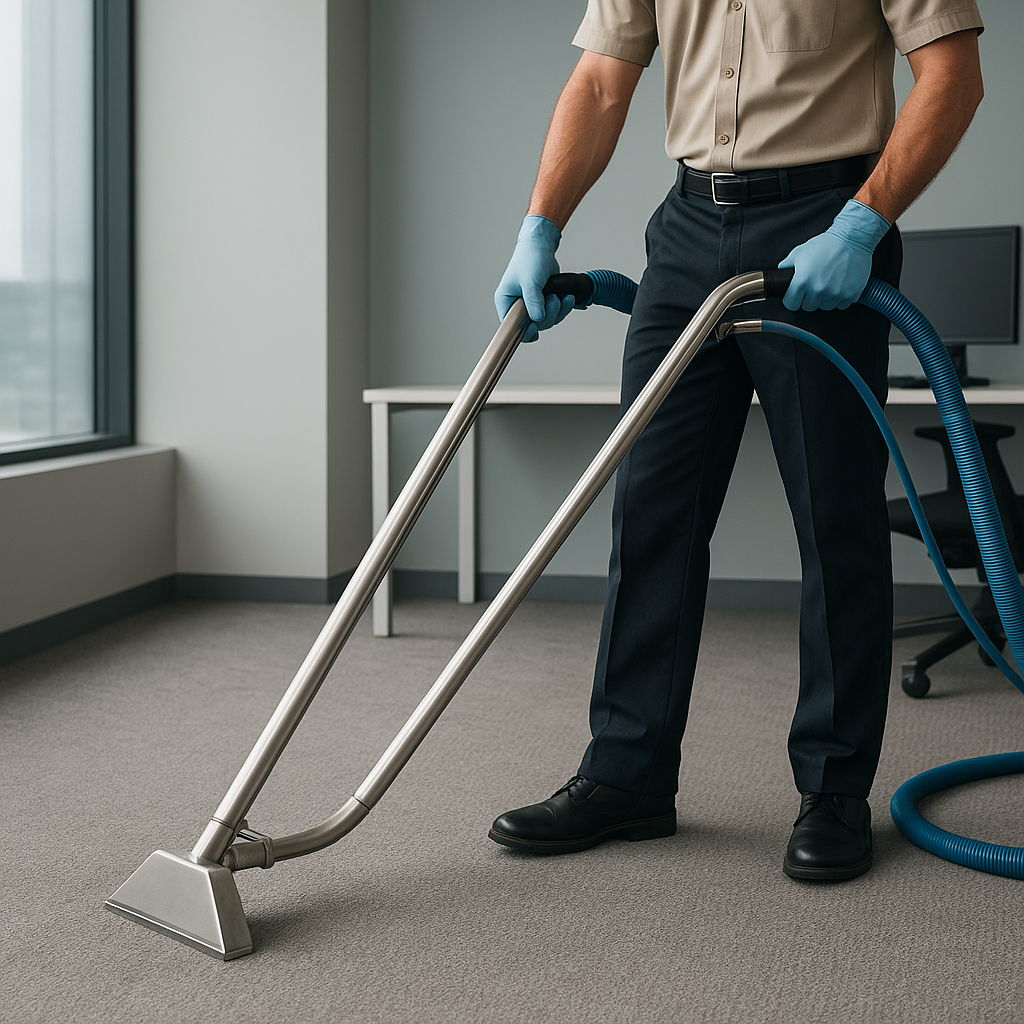
Hot-water extraction uses heated water, cleaning solution, agitation, and recovery equipment to flush soil from carpet. It may suit heavily soiled areas, but the proposal should explain drying expectations and moisture controls. Low-moisture cleaning uses less water and may reduce downtime, which can help offices that must reopen quickly.
Encapsulation applies a solution that captures soil as it dries. Vacuuming then removes the dried residue. Other processes may rely more heavily on absorbent compounds or targeted agitation. The method label alone, however, does not establish quality.
Ask whether technicians will pre-vacuum, treat spots, agitate soil, extract or remove cleaning residue, groom the carpet, and inspect the result. Confirm how they will protect baseboards, walls, furnishings, electronics, hard flooring, and nearby occupied areas.
According to the U.S. Environmental Protection Agency’s Inside Story guide, people in the United States spend about 90% of their time indoors. That fact supports careful building maintenance, but it does not mean carpet cleaning alone solves indoor-air-quality concerns. A proposal should avoid turning a maintenance service into a broad health claim.
How should Spokane businesses compare service quotes?
Compare quotes by matching each provider’s written scope, method, exclusions, timing, and qualifications. The lowest total may not represent the lowest overall cost if important work is excluded.
Request room names, square footage or other pricing units, the cleaning method, included steps, exclusions, and any minimum charge. The scope should identify whether the price covers furniture moving, stairs, elevators, spot treatment, deodorizing, protectant, and difficult-access areas. If those items cost extra, ask for rates before approving the work.
Businesses reviewing local options can use carpet cleaning spokane as one Spokane Valley service page to compare stated processes, service coverage, and published policies with competing proposals.
Ask each provider to state the expected drying window, ventilation requirements, re-entry guidance, and response plan if carpet remains damp longer than expected. Also compare technician training, insurance documentation, references from similar offices or commercial properties, scheduling flexibility, and communication procedures.
A complete proposal should explain who confirms access, reports unexpected conditions, handles changes, and follows up after service. That detail helps facilities teams weigh downtime, consistency, and total cost before scheduling.
What risks and marketing claims should buyers question?
Health, stain-removal, odor, and scheduling promises should be treated as claims to verify, not guaranteed outcomes. A written scope should explain the method, limitations, pricing, and response if the result differs from expectations.
Carpet cleaning is not a cure for allergies, asthma, mold contamination, or broad indoor-air-quality problems. Cleaning may remove some settled material, but it cannot address every source of indoor contamination. Likewise, no provider can reasonably guarantee removal of every stain, permanent odor elimination, prevention of future soiling, or a fixed cleaning schedule.
Before authorization, ask how the technician will assess color bleeding, shrinkage, browning, fiber damage, pre-existing wear, and stains that may be permanent. Confirm whether testing is included and what happens if the carpet reacts unexpectedly.
Review unusually low quotes carefully. They may exclude labor, furniture handling, stairs, access charges, spot treatment, deodorizing, or follow-up work. Require clear terms for satisfaction policies, disclaimers, damage reporting, refunds, and re-cleaning. If a provider will not explain those limits in writing, the proposal creates avoidable operational and financial risk.
How can businesses maintain carpets after professional cleaning?
Professional cleaning works best as one part of a maintenance plan. Continue vacuuming with equipment suited to the carpet type and traffic level, and address spills promptly according to the manufacturer’s instructions.
Avoid unapproved chemicals and aggressive scrubbing, which can spread stains or damage fibers. Give staff a simple reporting process for spills, recurring stains, and odor complaints. Place mats at entrances, keep them clean, and focus additional attention on heavily traveled areas.
Keep a service log showing cleaning dates, treated areas, reported problems, drying performance, and noticeable changes in appearance. Review the carpet after it has fully dried. Then document unresolved stains, odor, uneven appearance, or moisture concerns against the provider’s written scope.
Set future service intervals based on observed traffic, soiling, manufacturer guidance, and business needs. A fixed schedule that ignores actual conditions may waste money, while waiting until carpets look heavily soiled can make results harder to achieve.
Key takeaways
- Inspect carpet fiber, construction, damage, traffic, access, and moisture concerns before comparing providers.
- Evaluate the complete process, not just labels such as extraction, low-moisture, or encapsulation.
- Compare written scopes, exclusions, drying guidance, furniture handling, and follow-up terms.
- Question health and guaranteed-result claims that exceed what routine carpet maintenance can establish.
- Use service records and observed traffic to guide future cleaning intervals.
Businesses seeking broader workplace and operations coverage can also explore Hustle Weekly.