




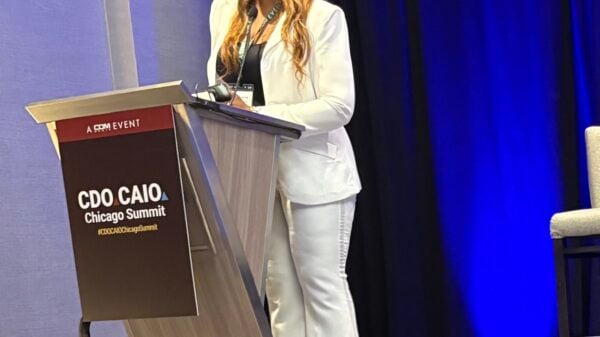
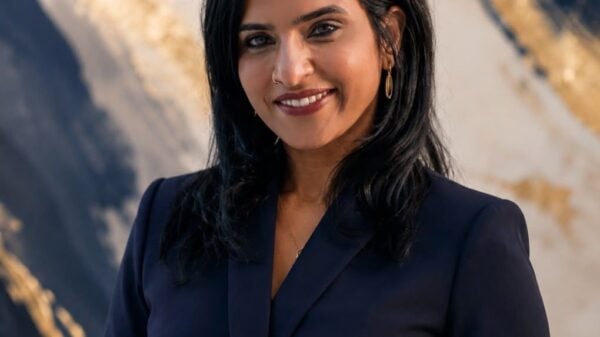











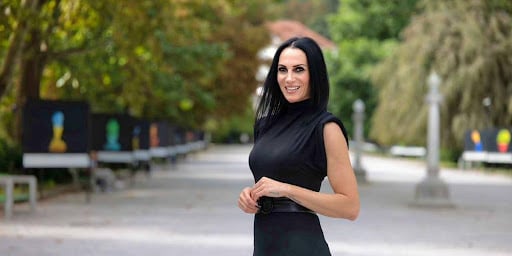
Lisandra V. Varacha is a luxury travel entrepreneur and founder operating across curated villa hospitality and trust-based private opportunities who has built her career through resilience, discipline, and personal reinvention. As the CEO of 5 Star Villa d.o.o. and Lunorius OÜ, she works across luxury villa rentals, private access opportunities, and off-market investments. She has a deep understanding of people, emotional intelligence, and intentional living. Through 5 Star Villa Holidays, Lisandra creates carefully curated travel experiences across destinations such as Bali, Ibiza, Mallorca, Türkiye, and the Maldives. The company focuses on handpicked villas, personalized support, and meaningful hospitality. Behind the business is a people-first approach that values comfort, privacy, and connection.
In this interview, Lisandra V. Varacha opens up about trauma-aware leadership, personal transformation, emotional strength, and the lessons she has learned while building businesses in demanding industries. She also shares her thoughts on freedom, human connection, and creating experiences that feel personal and memorable.
Q1. Your story has touched on survival, reinvention, and building businesses across industries and countries. And so, before you put yourself out there, what defining moments do you think shaped your identity? How did those experiences influence the way you lead today?
Lisandra V. Varacha: I don’t think my identity was shaped by business first. It was shaped by life long before business ever entered the picture.
Growing up, I was forced to mature earlier than I probably should have. I was raised by my mother, who was my only real family, my compass, and one of the strongest people I have ever known. Watching her navigate life with resilience, while also experiencing early instability, loss, and emotional complexity, shaped me deeply. Very early on, I understood that not everyone grows up with certainty. Some people are born into stability. Others learn how to build it for themselves. I became part of the second group.
That changes how you see life.
It teaches observation. Emotional discipline. The ability to read people beyond words. Long before I understood business, I understood pressure, silence, and how much human behavior is often shaped by what sits beneath the surface.
Later, working across industries, countries, and high-pressure environments only reinforced something I already knew: business is never only about strategy or transactions. At its core, it is deeply about people. That shaped the way I lead.
I do not lead from ego or from the need to constantly prove myself. I lead through clarity, consistency, emotional intelligence, and calm decision-making, especially when uncertainty is high. I was also underestimated more than once, both personally and professionally. Over time, that taught me patience, positioning, and the value of letting results speak louder than explanations.
If reinvention taught me anything, it is that freedom is intentional. You can rebuild your direction, your mindset, and your standards, but only when you are honest enough to understand what truly matters. That is how I lead today: with resilience, but also with awareness. With ambition, but without unnecessary noise. And with a deep respect for how trust, consistency, and human understanding quietly shape both life and business.
Q2. You’ve shared insights on trauma-aware leadership and understanding human behavior in luxury hospitality. How do you personally balance emotional intelligence with high-performance expectations when managing teams, partnerships, and demanding clients in high-stakes environments?
Lisandra V. Varacha: One of the biggest lessons I learned early is that emotional intelligence and high standards are not opposites. In strong leadership, they need to exist together.
For me, emotional intelligence does not mean becoming overly reactive, overly soft, or avoiding difficult conversations. It means understanding people deeply enough to know when pressure creates performance, when pressure creates fear, and when clarity matters more than intensity. When you experience instability, emotional complexity, or difficult life chapters early on, you become highly aware that not every raised voice is urgency, not every silence is strength, and not every confident person is grounded. You start understanding that human behavior often says far more beneath the surface than words alone.
That awareness stayed with me. Whether in life or business, I became highly observant of stress, defensiveness, fear, ego, insecurity, and how pressure changes people. That became one of the most valuable things I carried into leadership.
Whether I am managing partnerships, working with teams, handling demanding clients, or navigating high-stakes environments, I try to stay emotionally aware without losing structure. I listen carefully. I observe patterns. I try to understand what sits beneath behavior, but I also believe accountability matters.
Empathy without boundaries can create chaos. Standards without emotional intelligence can create pressure without trust. Real leadership often sits between those two. In luxury hospitality especially, high-end clients rarely want emotional noise. They want calm systems, clear communication, reliability, discretion, and the feeling that someone is fully in control without making the experience feel heavy. That is where emotional intelligence becomes part of performance itself.
Personally, I protect that balance through boundaries, calm communication, transparent expectations, and consistent execution. I do not believe every challenge deserves emotional escalation. Some situations require listening. Some require patience. Some require decisive action.
The goal is never to lead from emotion or pressure alone. It is to lead with awareness, while still protecting standards. That balance shaped not only how I lead but also how I move through life: staying human without losing discipline and staying ambitious without creating unnecessary noise.
Q3. You’ve challenged many traditional ideas about luxury travel, especially the belief that appearance alone creates value. What do you think the luxury hospitality industry still misunderstands about modern guest expectations? Also, where do you believe the next major shift in the market is heading?
Lisandra V. Varacha: One of the biggest mistakes luxury hospitality still makes is assuming that luxury is primarily visual. For years, the industry associated value with aesthetics: larger properties, polished design, exclusivity, and visible excess. Those things may attract attention, but they no longer define luxury on their own.
Appearance may create interest. Trust creates decisions.
Modern luxury guests are far more emotionally intelligent, time-sensitive, and psychologically aware than many brands still assume. High-end clients are rarely buying a villa, hotel, or destination alone. They are buying certainty, privacy, discretion, ease, and the confidence that their time, energy, and expectations will be respected.
That is where I believe the industry still gets it wrong. Too many businesses focus on what looks luxurious, while underestimating what actually feels luxurious.
Luxury today is often not about more. It is about less friction, clear communication, seamless execution, privacy, consistency, emotional intelligence, respect for personal space, and anticipating needs without becoming intrusive.
In hospitality, people often assume premium service means doing more. In reality, truly high-end service often means knowing what not to interrupt, what not to complicate, and when presence matters more than performance. The most powerful experiences rarely feel loud. They feel effortless. That is where psychology becomes critical. Guests are no longer only comparing properties. They are unconsciously evaluating trust, responsiveness, discretion, transparency, and whether a brand reduces uncertainty or creates unnecessary mental load. Hence, reducing friction has quietly become part of luxury itself.
As for the next major shift, I believe luxury hospitality is moving toward deeper curation, emotional intelligence, quiet luxury, and highly personalized experiences built around relevance rather than excess. People want less generic inventory and more intentional experiences. They want spaces that align with how they want to feel: peace, freedom, privacy, reconnection, wellness, or simply time without unnecessary noise. The brands that will lead the next chapter of luxury hospitality will not necessarily be the loudest or the biggest. They will be the ones who create trust early, reduce friction consistently, and understand that modern luxury is no longer only about where someone stays. It is about how intelligently that experience fits into someone’s life.
Q4. Through 5 Star Villa d.o.o. and your investment work with Lunorius OÜ, you operate in spaces built heavily on trust and discretion. With the landscape today being dominated by visibility and constant online exposure, how have you learned to protect both your privacy and your decision-making clarity as a founder?
Lisandra V. Varacha: Operating in spaces built around trust, discretion, and high-level relationships taught me something very clearly: visibility and value are not always the same thing.
Today, many founders feel pressure to constantly be visible online, in branding, in positioning, and across public spaces. There is often this belief that if people do not constantly see you, you risk becoming irrelevant.
I do not fully agree with that. Visibility has its place. But not everything valuable belongs online.
Over time, I learned that protecting privacy is not about becoming distant. It is about becoming intentional. Whether in hospitality or trust-based, off-market opportunities, I have seen that strong relationships are often built quietly. Sensitive conversations, client expectations, high-level trust, and meaningful opportunities do not always benefit from visibility. In many cases, discretion protects what actually matters. That understanding shaped how I operate as a founder. I became far more selective about where I place energy, what I share, who I engage with, and what truly deserves my attention. Not every opportunity requires immediate reaction. Not every conversation deserves access. And not every visible move creates real progress. Protecting decision-making clarity became equally important.
In a world built on constant input, urgency, and digital noise, I learned that clarity often comes from creating space before reacting. I value observation, structure, selective focus, and the discipline to pause long enough to separate emotional pressure from strategic thinking. That has helped me avoid decisions driven by ego, urgency, or outside expectations.
Privacy also protects perspective. When you are not constantly performing, explaining, or reacting to external noise, you stay closer to what matters: timing, values, trust, and long-term thinking.
As a founder, I believe one of the strongest forms of discipline is knowing what deserves visibility and what deserves protection. Because not everything powerful needs to be public to be valuable.
Q5. Many entrepreneurs speak about scaling businesses, but fewer speak openly about the emotional cost of ambition. During periods of uncertainty or personal exhaustion, what practices or mindset shifts have helped you stay grounded without losing momentum?
Lisandra V. Varacha: I think one of the biggest misconceptions around ambition is that momentum always has to look fast, visible, or strong. I no longer believe that.
There were periods in my life where uncertainty, personal loss, grief, emotional exhaustion, and rebuilding became part of my reality. Those experiences taught me that ambition without emotional awareness can quietly become destructive. Grief also taught me something important: momentum can still exist even when life feels heavy. For a long time, strength was often associated with pushing harder, doing more, or never slowing down. I learned that real strength can look very different. Sometimes it is knowing when to pause without giving up. Sometimes it is about protecting energy without losing discipline. And sometimes it is continuing, even if the pace no longer looks the same.
That changed the way I think about resilience. I stopped seeing grounding as a weakness or a lack of momentum. I started seeing it as part of sustainability. One of the biggest mindset shifts was understanding that not every season of life is meant for expansion. Some seasons are for rebuilding. Some for clarity. And some for reassessing what truly deserves energy. That helped me stay connected to momentum without confusing movement with pressure.
Practically, I rely a lot on structure. Clear priorities. Boundaries. Quiet reflection. Observation. Protecting mental space from unnecessary noise. Creating enough distance to separate emotional overwhelm from strategic thinking.
I also had to become more honest with myself. Ambition can easily become tied to proving, overperforming, or carrying more than necessary. Over time, I understood that sustainable ambition is very different from survival mode. You do not always need to move harder. Sometimes you need to move more wisely.
What keeps me grounded most is remembering why I build at all. For freedom, meaningful work, trust, and long-term value. For creating something aligned with how I want to live, not only how I want to succeed. That perspective helped me protect momentum without losing myself inside it. Because for me, success has never only been about growth. It is also about staying whole while building.
Q6. And lastly, let’s talk about how perception can heavily influence opportunity. Have there been moments when people underestimated you, misunderstood your approach, or questioned your unconventional path? How did those experiences shape the way you now negotiate, lead, and position yourself in elite business spaces?
Lisandra V. Varacha: Absolutely. I think when you choose an unconventional path, being misunderstood becomes part of the journey.
There were moments, both personally and professionally, when people underestimated me, questioned my approach, or assumed that quietness meant uncertainty, softness, or a lack of strength. In many environments, if you are not the loudest person in the room, calm can easily be mistaken for weakness. I learned early that strength does not always need to announce itself.
Growing up, navigating emotional complexity, loss, rebuilding, and different life chapters forced me to develop resilience much earlier than I expected. That shaped how I carry myself today. Being underestimated was frustrating at times. Earlier in life, I may have felt a stronger need to explain, prove, or overdeliver. Over time, I understood something important: not every misunderstanding needs correction, and not every room deserves the same access to your energy. That changed how I negotiate, lead, and position myself.
Today, I pay far more attention to patterns, intention, and alignment than surface-level perception. In negotiation, I learned patience, silence, timing, and listening beyond what is being said. People often reveal more through pressure, inconsistency, urgency, and ego than through polished words. That awareness became one of my strongest advantages.
Being underestimated also taught me discernment. It taught me where energy is worth investing, where trust belongs, and where distance protects clarity. It sharpened patience, not bitterness. Awareness, not defensiveness. As a leader, I no longer see positioning as performance. I see it as clarity. Knowing what I stand for. Knowing what I do not compromise on. Knowing when to engage, when to step back, and when consistency speaks louder than explanation.
To me, high-level business environments were never only about access. They are about emotional intelligence, timing, discernment, credibility, and how you carry yourself when pressure is high.
If being underestimated shaped me in one way, it taught me this: Quiet strength, strategic patience, and integrity often travel much further than the need to constantly prove yourself.
And today, that is very much how I lead, negotiate, and move through business.
Conclusion
Lisandra V. Varacha’s story reflects emotional discipline, reinvention, and a deeply intentional approach to leadership and freedom. Throughout this conversation, she speaks honestly about leadership, emotional awareness, business pressure, and the importance of staying connected to personal values. Through 5 Star Villa Holidays and Lunorius OÜ, Lisandra has created businesses focused on trust, discretion, and carefully curated experiences. She believes luxury is about peace, comfort, privacy, and feeling understood. Her ideas around trauma-aware leadership and intentional freedom offer a different perspective on success in today’s fast-moving world.