



























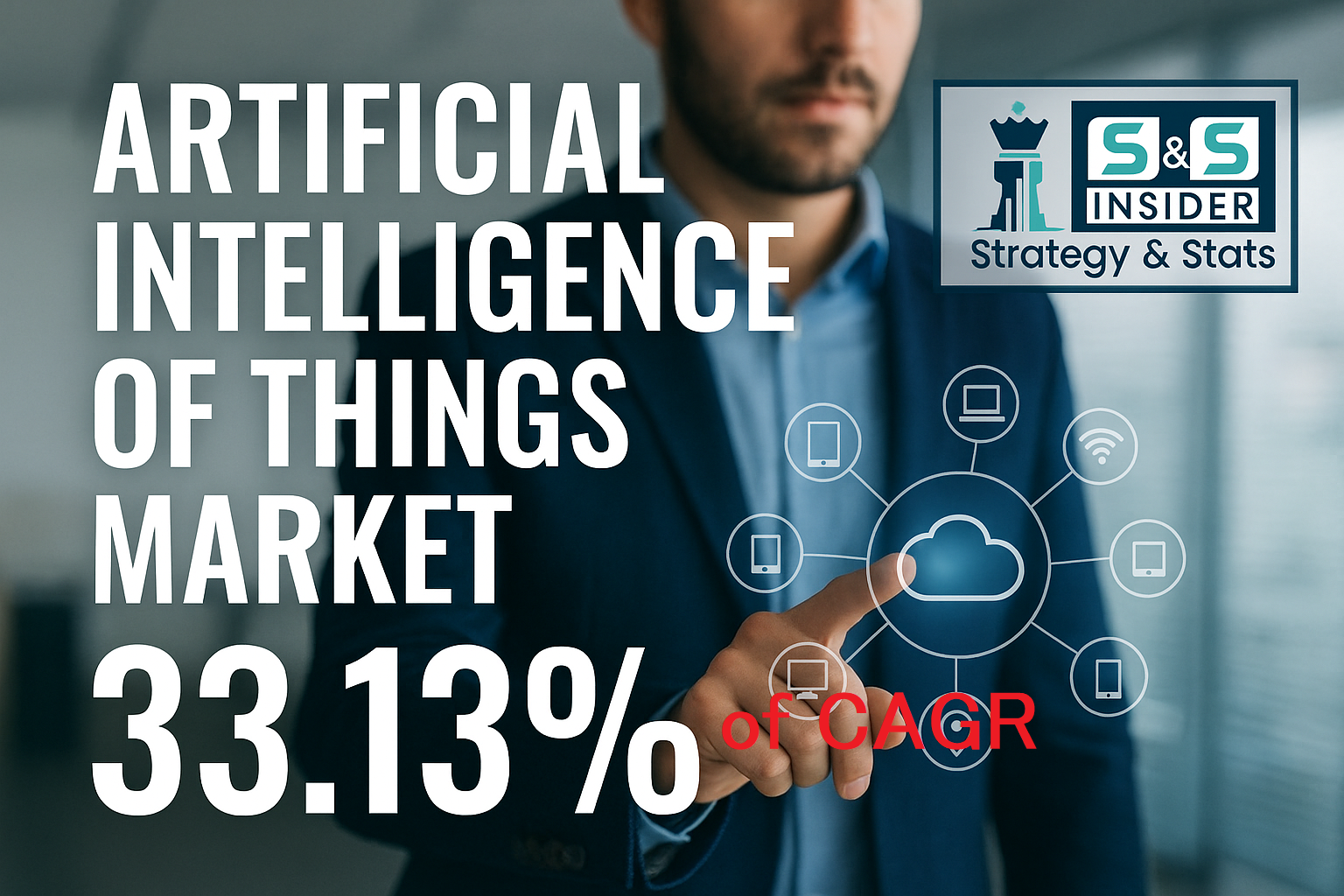
In the modern digital economy, the convergence of artificial intelligence (AI) and the Internet of Things (IoT) has emerged as one of the most transformative trends shaping industries and lifestyles alike. This synergy, known as the Artificial Intelligence of Things (AIoT), blends the power of intelligent decision-making with connected ecosystems to drive automation, operational efficiency, and predictive capabilities. The Artificial Intelligence of Things (AIoT) Market was valued at USD 28.15 billion in 2023 and is projected to reach a remarkable USD 369.18 billion by 2032, expanding at a CAGR of 33.13% from 2024 to 2032. This exponential growth reflects the accelerating adoption of intelligent connectivity across sectors such as healthcare, manufacturing, retail, energy, and transportation.
Understanding AIoT: Where Intelligence Meets Connectivity
At its core, AIoT represents the fusion of AI’s cognitive capabilities with IoT’s interconnected infrastructure. While IoT focuses on collecting massive amounts of real-time data through sensors and devices, AI processes and analyzes that data to enable intelligent automation and autonomous decision-making. This combination transforms raw data into actionable insights, empowering devices to think, learn, and act without human intervention.
From smart homes and wearable devices to industrial automation and autonomous vehicles, AIoT is redefining how machines interact with their environments. As data generation accelerates globally, AIoT ensures that connected systems not only sense but also understand and respond intelligently, marking a new era of self-learning ecosystems.
Market Dynamics Driving the AIoT Revolution
The remarkable growth trajectory of the AIoT market is fueled by a combination of technological advancements and the rising demand for intelligent connectivity. Industries are rapidly shifting toward smart operations, and AIoT serves as the critical enabler of this transformation.
- Rising Adoption of Smart Devices and Edge Intelligence
The explosion of connected devices—ranging from industrial sensors to personal wearables—has created a massive influx of data that demands efficient processing. The integration of AI at the edge enables real-time analytics, reducing latency and bandwidth requirements. Edge AIoT applications are particularly crucial in sectors like healthcare monitoring, autonomous vehicles, and manufacturing, where split-second decisions can significantly impact outcomes.
- Expansion of Industrial Automation and Smart Manufacturing
The manufacturing sector stands as one of the primary beneficiaries of AIoT adoption. Through predictive maintenance, quality control, and process optimization, factories are evolving into smart, interconnected systems. By leveraging AIoT, manufacturers can anticipate equipment failures, streamline workflows, and enhance production efficiency—ultimately lowering costs and increasing uptime.
- Growing Need for Predictive Analytics and Decision Intelligence
Organizations across sectors are recognizing the value of predictive analytics powered by AIoT. By combining IoT’s real-time data collection with AI’s predictive algorithms, businesses can forecast trends, detect anomalies, and make proactive decisions. Whether in supply chain management or energy consumption optimization, this predictive intelligence is transforming how enterprises operate.
- Advancements in 5G and Cloud Infrastructure
The rollout of 5G networks and scalable cloud platforms is accelerating AIoT deployment. Faster data transmission, low-latency communication, and cloud-edge integration enable seamless connectivity for billions of smart devices. This infrastructure empowers AIoT systems to perform high-speed data processing, ensuring instant responses and more reliable automation across applications.
Transformative Impact Across Industries
The growing influence of AIoT extends far beyond technological advancement—it’s reshaping entire sectors by enabling data-driven intelligence and automation.
Smart Healthcare: Enhancing Patient Outcomes
In healthcare, AIoT enables continuous patient monitoring, predictive diagnostics, and personalized treatment. Wearable devices powered by AI can track vital signs, detect irregularities, and alert healthcare providers in real time. Hospitals are adopting AIoT-driven systems to optimize workflows, enhance patient safety, and improve clinical outcomes.
Automotive and Transportation: Pioneering Autonomous Mobility
AIoT lies at the heart of intelligent transportation systems and autonomous vehicles. By combining sensor data with AI-based analytics, vehicles can interpret road conditions, detect obstacles, and make autonomous driving decisions. This convergence enhances safety, reduces accidents, and paves the way for connected mobility ecosystems.
Smart Cities and Infrastructure: Building Sustainable Futures
Urban planners are leveraging AIoT to create more efficient, sustainable cities. From intelligent traffic management to energy-efficient buildings and smart waste management, AIoT helps reduce carbon footprints while improving urban livability. Smart grids and adaptive lighting systems exemplify how AIoT is optimizing public infrastructure.
Retail and Supply Chain: Driving Real-Time Optimization
Retailers and logistics companies are adopting AIoT to streamline operations and improve customer experiences. Smart shelves, automated inventory tracking, and demand forecasting systems powered by AIoT help reduce waste and ensure timely product availability. In supply chain logistics, AIoT enhances route optimization and predictive maintenance for delivery fleets.
Challenges and Restraints Hindering Market Expansion
Despite its immense potential, the AIoT market faces several challenges that could slow adoption if not addressed effectively.
Data security and privacy remain top concerns, as AIoT systems process vast amounts of sensitive data across connected networks. Cybersecurity threats, unauthorized access, and data breaches could jeopardize both organizational and consumer trust.
Moreover, the complexity of integrating AI algorithms into existing IoT frameworks presents technical barriers. Many industries also face a shortage of skilled professionals proficient in AI, IoT, and data science. Ensuring interoperability among diverse devices and standards further complicates widespread deployment.
Future Outlook: The Path Toward Intelligent Ecosystems
The coming decade promises to be a defining era for the Artificial Intelligence of Things (AIoT) Market, as industries accelerate digital transformation initiatives and governments invest in smart infrastructure. As AI models become more sophisticated and IoT networks more pervasive, the synergy between them will unlock unprecedented value.
Emerging innovations such as federated learning, explainable AI, and neuromorphic computing are expected to make AIoT systems more efficient, transparent, and adaptive. Meanwhile, the integration of blockchain for secure data exchange could further enhance trust in connected ecosystems.
By 2032, AIoT will no longer be a futuristic concept but a foundational element of the global economy—powering autonomous systems, sustainable cities, and intelligent enterprises. The market’s anticipated leap from USD 28.15 billion in 2023 to USD 369.18 billion by 2032 underscores not just technological progress but a paradigm shift toward cognitive connectivity.
Conclusion: The Intelligent Future of Connectivity
The Artificial Intelligence of Things represents the next great leap in the evolution of digital ecosystems. As AI enables machines to think and IoT allows them to communicate, their union creates an interconnected world driven by intelligence, efficiency, and autonomy.
The explosive growth of the AIoT market highlights its transformative role across industries—enhancing operations, empowering predictive insights, and fostering innovation. With a projected CAGR of 33.13% through 2032, AIoT is set to redefine the boundaries of what connected systems can achieve, ushering in an era where intelligent connectivity drives the future of progress.